
Today in AI4 min read
Perplexity Brings Hybrid AI to the Mac: Local Privacy Meets Cloud Intelligence
Perplexity is introducing a new way to run AI that could become especially important for businesses handling sensitive information.
Perplexity is introducing a new way to run AI that could become especially important for businesses handling sensitive information.
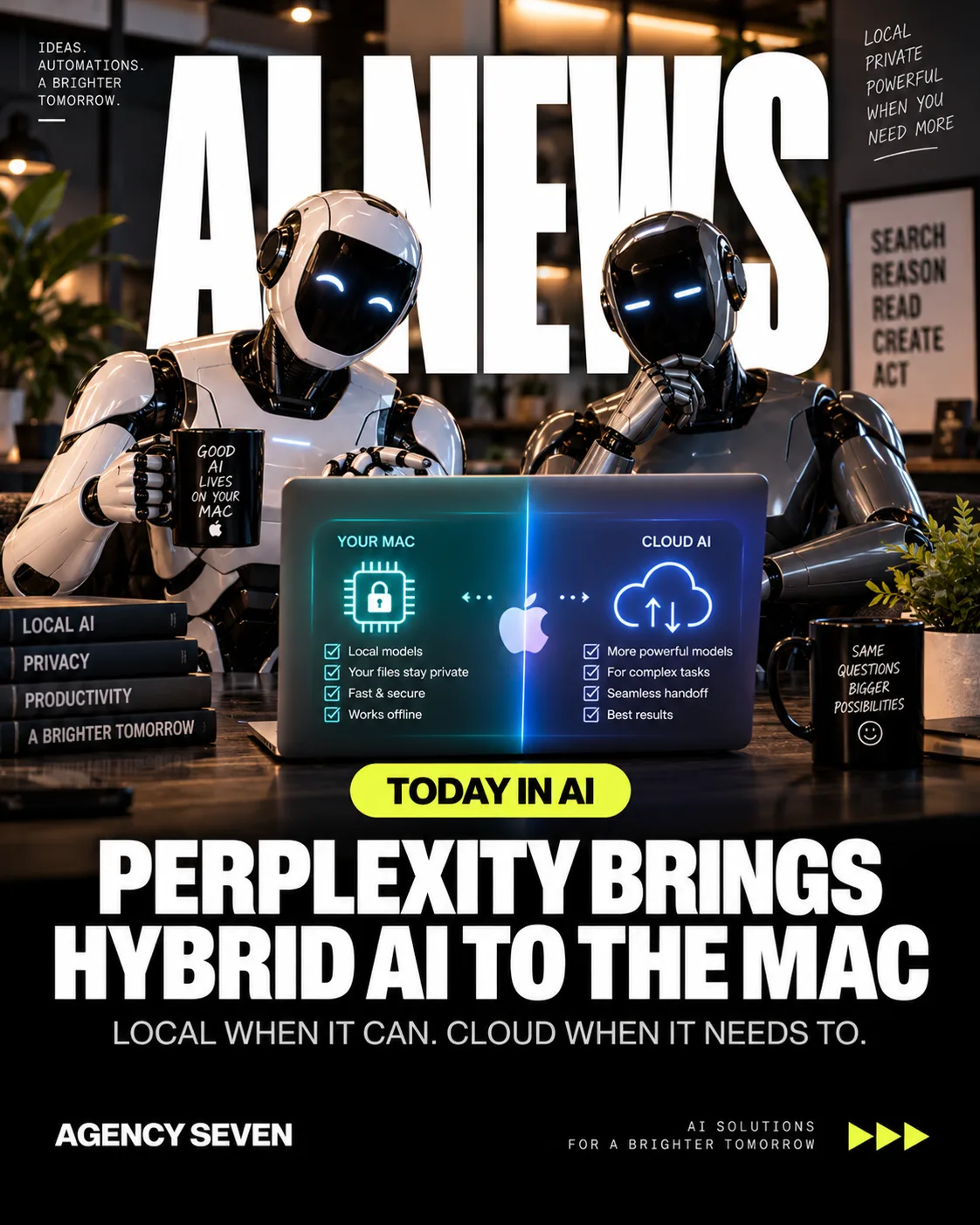
Its new Hybrid Compute system for Mac splits a single AI task between powerful cloud models and a smaller model running directly on your Mac. The goal is simple: use the cloud when you need maximum reasoning power, but keep private files and sensitive data on your own machine.
That creates an interesting middle ground between fully cloud-based AI and fully local AI.
How Perplexity Hybrid Compute works
Perplexity Computer coordinates both sides of the workflow.
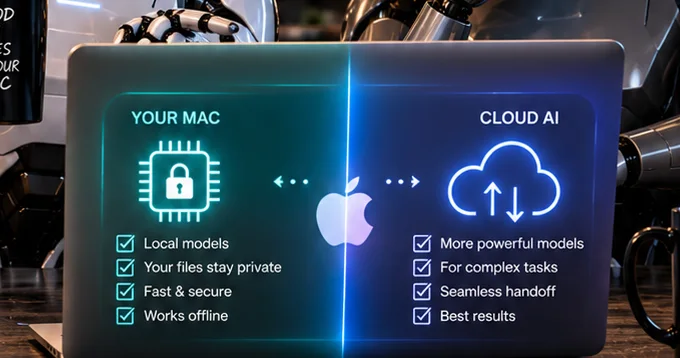
Cloud models can handle tasks such as web research, planning, and complex reasoning. When a step involves confidential documents or private information, the task can be handed off to a local model running on an Apple-silicon Mac. The final results are then combined into one workflow instead of forcing the user to manage separate local and cloud prompts.
The idea is essentially:
Cloud for power. Mac for privacy.
That could make AI much more practical for professionals who want frontier-model capabilities but cannot simply upload every document they work with.
A privacy gate decides what can leave your Mac

One of the most important pieces is Perplexity’s on-device privacy gate.
According to Perplexity, the system can detect sensitive information before it leaves the machine. Depending on the situation, it can keep information local, mask private details, refuse an action, or ask the user for permission before sending information to the cloud.
That is a meaningful difference from the typical AI workflow where a user uploads a document directly to a remote server and trusts the provider’s privacy controls.
With hybrid compute, some information may never leave the computer in the first place.
Why this could matter for businesses
The most interesting applications are probably not casual AI questions.
They are workflows involving confidential information.
Perplexity gives examples across finance, advertising, and legal work. An investment team could research public filings in the cloud while comparing them against confidential deal documents locally. A law firm could research case law online while processing privileged client files on the Mac.
The same concept could apply to many other businesses: customer records, contracts, internal financial documents, unpublished marketing campaigns, HR data, proprietary research, and confidential client files.
Instead of choosing between privacy and capability, hybrid computing tries to provide both.
Your Mac becomes part of the AI infrastructure
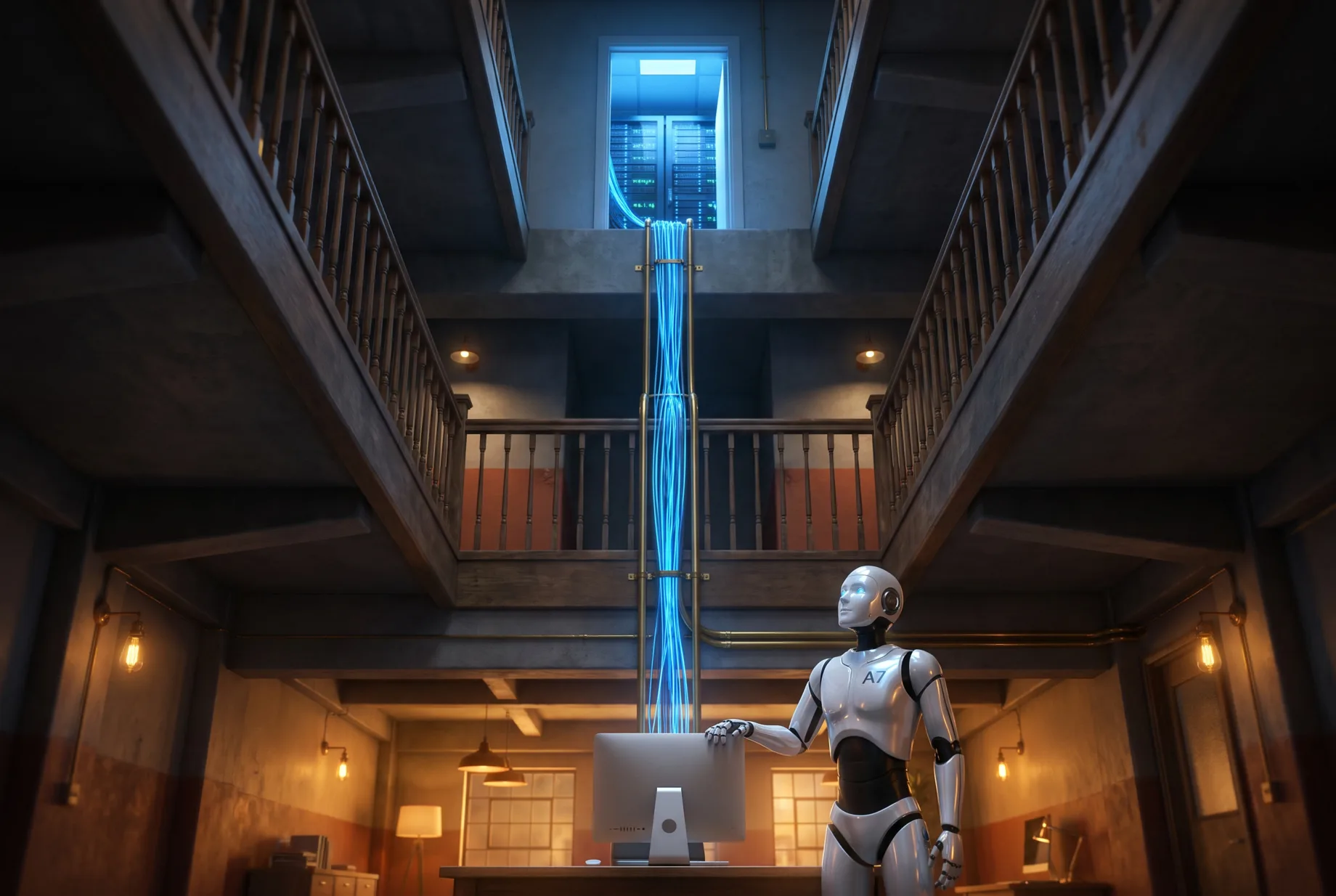
This is also interesting because it changes the role of the personal computer.
Until recently, most advanced generative AI happened almost entirely in massive cloud data centers.
With increasingly capable local models and powerful Apple silicon, the Mac itself can now become part of an AI agent’s computing environment.
Perplexity says Hybrid Compute works on Apple-silicon Macs running macOS 15 or newer with at least 24GB of unified memory. The feature is available for Perplexity Pro, Max, and Enterprise subscribers.
Users can also run Perplexity Computer on a dedicated Mac mini and interact with it remotely from an iPhone, effectively turning the Mac into a private always-on AI workstation.
Local AI and cloud AI may work better together
For the last few years, AI discussions have often treated local and cloud models as competing approaches.
Cloud models offer enormous computing power and access to the latest frontier systems.
Local models offer privacy, control, lower latency, and the ability to work offline.
Hybrid Compute suggests that the future may not require choosing one.
The AI system can decide which environment makes the most sense for each part of the task.
That architecture could become increasingly common as AI agents gain access to more sensitive company systems.
This is bigger than another AI feature

Perplexity’s announcement points toward a broader change in how AI software could be built.
Today, most applications send information to a centralized cloud service.
Tomorrow, an AI agent may operate across several computing environments at once:
your device → your company infrastructure → cloud AI → external tools
The agent becomes the orchestration layer connecting everything together.
For companies concerned about sending sensitive information to third-party AI providers, that could remove one of the biggest barriers to adoption.
AI may be coming back to the personal computer
Cloud computing has dominated software for more than a decade.
AI could partially reverse that trend.
As local models improve and computers become powerful enough to run them efficiently, some intelligence can move back onto the user’s device.
The cloud will still provide the most powerful models.
But your laptop, desktop, or dedicated Mac mini may increasingly handle the information you do not want leaving your building.
Perplexity’s Hybrid Compute offers an early glimpse of what that future could look like:
Local when it can. Cloud when it needs to.
Learn this with us
AI Tech Training
The hands-on track — agents, prompts and the workflows that run them.
Start AI Tech TrainingAI Business Training
The operator track — where AI saves hours and wins more customers.
Start AI Business Training